 TAPP
How it works, in plain words.
What TAPP does, explained with an analogy. The technical version is on the front page under "How it works (in detail)".
In one line: a library checkout card
When you borrow a book, you write "who, when, which book" on a card. TAPP is that card. With two differences.
Difference 1: the card goes on the town notice board
Not inside the school. On a public board anyone can read. So if someone later says "you added that card afterwards", you can answer: "It was on the board that day. Anyone could see it." Once posted, the card cannot be taken down. Not by you. Not by TAPP.
The board is Sigstore Rekor, a public ledger that Google and GitHub use to record software signatures.
Difference 2: the book itself never goes on the board
Only "who, when, which book" is posted. The book stays with you. Reading the board tells nobody what is inside.
"Which book" is a fingerprint: 64 characters computed from the file's contents. Change one character and the fingerprint changes. A fingerprint cannot be turned back into the text.
What happens, in three frames
 1
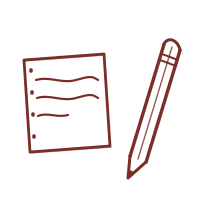
Make it, save it
Write as usual, save as usual. Put your one line at the end of the post. Keep your editor and your blog.
 2
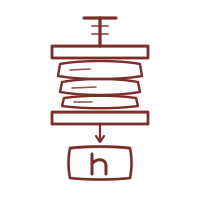
Take the fingerprint
TAPP computes the fingerprint of that version. The text is not sent. Only the fingerprint.
 3
Post it on the board
The fingerprint and the time go into Sigstore Rekor. TAPP checks the receipt, then it is done.
These three repeat on every save. So version 1, version 2, version 3 line up in order, with every revision in between.
Why you can say "I made it first"
Think of homework. A classmate's homework looks just like yours. They will probably say:
- "You wrote yours afterwards."→ The date on the board is earlier than the day they handed theirs in. The board cannot be edited.
- "It just happens to look similar."→ Versions 1 to 3 show how yours changed, step by step.
- "I never saw it."→ (When a handoff was recorded) who received it, when, and under which terms is on record.
TAPP does not say who is at fault. It only says "this version existed on this day" and "this was handed to this person on this day". The judgement is left to whoever reads the record: you, the other side, a lawyer if needed.
What TAPP does not say, and cannot do
- It never says "someone copied this". It lists facts.
- It does not judge the content. The text never reaches TAPP.
- It cannot stop anyone from copying. What it can do is write things down first.
TAPP is not a lock. It is a notebook that records, in a place nobody can erase, that you made it first.
If something happens, you bring the notebook.
You can check it yourself
You do not have to trust TAPP. Enter a record number on the verify page and you get the disclosure (record R and random s) and a link to the actual entry on the board. Compute the fingerprint yourself and compare. The steps are on How to.
When you hand something over (business plan)
If you give a proposal or data to someone, TAPP shows them your terms first. The moment they agree, "to whom, under which terms, what, when" is posted on the board, and only then is the link opened. Never the other way round. If it cannot be posted, nothing is handed over. → Hand
What stays, what doesn't
- Stays: the fingerprint of each version (64 chars) / the version number and the previous version's fingerprint / the fixed time / the ledger entry number
- Doesn't: the text / the file name / your name / how you typed
A fingerprint can't be turned back into text. Your text stays where it is: with you.
For developers integrating TAPP into your own product: hand https://tapplog.com/guide.md to your coding AI (Cursor, Claude Code, …) as is. It will ask a few questions, then implement in small tickets. You only add the key, deploy, and open the page once.